Featured

Conversational marketing technologies – the big trend for 2020

The last year has been transformational but advertising is at a crossroads. We are sitting on learnings and insights powerful enough to fundamentally change our industry, yet without the tools and knowledge to use them, everything might yet come crashing down. We need to understand our audiences and find ways to convert that understanding into engaging conversations.

I’d be remiss if I didn’t bring up transparency and trust in our industry. Since GDPR hit the headlines almost three years ago, the industry has worked hard to react to the need for greater privacy. Yet we continue to be plagued by questions of fraud, the reliability of data, and a creeping sense that consumers are no longer paying attention to online advertising.

Machine learning is often touted as a way for advertisers to gain a better understanding of their audiences, while cutting down on fraudulent or worthless data points. But AI comes in many forms and has applications beyond better data models.

Take ‘Conversational Advertising’. This is any advertising that uses a conversational interface to speak directly to consumers, from smart speakers to banner ads, and they’re allowing us to achieve two major things digital advertising has missed.

The first is to understand who we’re talking to in the most direct way possible, simply by asking them. As Gartner explains,

Conversational marketing technologies enable interactions between companies and customers that mimic human dialogue … ”

This empowers advertisers who have historically relied on audience data and cookie pools. These indirect methods of knowing who you’re speaking to are prone to error on a huge scale. Visited the Monocle lately? Congratulations, you’re now a high net worth individual. Been to Mumsnet? Hope you like banner ads selling prams and baby formula. The cookie, the audience, these won’t be going away, but what conversational advertising gives us is a direct touch point with consumers that’s based on real interaction.

The second is to offer true customisation of the ad experience. In traditional banners, the design, tone of voice, and overall feel is set in advance and delivered, ideally to the right audience but often not. In a conversational banner the needs and preferences of the consumer can be judged during the interaction and the creative execution changed in real time to fit them.

If this is starting to sound a bit 1984 it needn’t. Part of the conversational trend is a reaction to the overwhelming amounts of personal data needed to run modern digital ad campaigns and the risk this poses to consumers. These are risks that brands are acutely aware of. One high profile case in 2019 saw a fine of £183m for a breach of customer data. But when an AI driven advertisement is personalised based on a real time interaction, the advertiser no longer needs to know who they’re speaking to ahead of time. It allows for the holy grail of personalised ad experiences with far lower levels of intrusive data use.

So, what does this mean for advertisers in 2020? Here are some of my predictions for the year ahead.

Messaging apps

Messaging is the natural home for conversational advertising and it’s huge.

In 2019, it is estimated that 73 trillion messages will have been sent via chat apps; trouncing social media and browser interactions by a significant amount …

– Ed Preedy, CRO, Cavai

Banner ads don’t work in an environment like WhatsApp which is conversational in nature. If you’re not speaking the same language as the platform you create a disconnect between the user experience and the experience you’re presenting. Get ready for conversational advertising to dominate messaging apps.

Smart speakers

A study of 2,000 British adults commissioned by Artefact UK revealed that,

“Six out of ten smart speaker owners (60%) have used them to make a purchase in the past year. In fact, nearly a quarter (22%) said they have done so within the past week”.

It’s not just adoption rates that have rocketed, making people comfortable with the kinds of interactions that were once thought impossible, vocal recognition technology now allows for insights into what a person is feeling; from sarcasm to happiness.

With this, advertisers can understand how their brand is perceived on a level never before seen.

Natural language generation

GPT-2, an open-source A.I. created by Elon Musk’s OpenAI, was recently released to great fanfare. Using NLG advertisers will soon be able to generate infinite variations of meaningful copy in a specific tone of voice.

In application an NLG model can give instant results. Air Canada generated 3% engagement lift with ‘urgency language’, compared to a 5% drop using ‘exclusivity language’ using such a model as the driver.

Happy New Year and here’s to a 2020 full of creativity, conversions and above all at, conversation!
AdTech and Lockdown

We live in strange times. Most of you will be reading this from home (and on a weekday no less!) perhaps with children or a significant other, while you ponder just how much toilet roll you’re allowed to buy before it counts as stockpiling.

It’s a strange time, but strange doesn’t have to mean bad, either for you, your business, or your clients. I’d like to share with you some of the key talking points we should all be mentioning on our next video call.

Chatbot WHO?

Before I begin I think it’s worth highlighting some of the critical work advertisers have already been doing to help in the fight against COVID-19.

The sudden need for an effective tool for communicating vital information recently saw the World Health Organisation double down on the use of Chatbot technology.

Just as governments are seeing record traffic to call centres, so too have we seen AdTech step up and provide conversational technologies to ensure citizens are able to get lifesaving information easily and effectively.

I think that’s a great win for our industry and something we should all be proud of.

Consumer behaviour has changed and that’s something we can’t ignore

It goes without saying but people are spending more time online. Let’s quantify that a little.

According to ComScore, the number of visitors to news publications has risen by up to 142% across Germany and France. Use of Instant Messaging like WhatsApp has risen 49% in the UK and a whopping 97% in Spain. According to CloudFlare overall internet traffic increased by 30% across Italy.

So people are spending the vast majority of their time online, but the way they spend their time is changing too. People are reading longer stories and spending more time on the page. Publishers should be accounting for longer engagements by seeking out interactive ad experiences and avoiding simple click-and-done creative.

Finally, video Consumption is way up. According to Kantar, Netflix saw a 29% rise in traffic along with 39% for YouTube. For brands struggling with the crisis this could be the time to shift investment from OOH and into VOD channels to ensure they retain their audiences.

Brick and Mortar Stores have to move fast and it’s AdTech that should be leading

While the economy is slowing down and people are staying indoors, they still have money to spend and time to fill. If you’ve traditionally done business on the high street you need a new way to present yourself to customers.

This is the perfect time to be investing in Virtual Storefronts and conversational technologies. If your customers are online then you should be too, and with consumer behaviour moving towards longer engagements advertisers should be looking for creative that breaks out of the traditional static banner.

I mention conversational technologies because these are the perfect tool for creating both a longer form interactive experience and a storefront all in one. Why simply present a call to action when you can actively engage people with products and services from the comfort of their own home.

Data Makes Budgets Last Longer

When budgets are tight data is key to ensuring success in advertising spend. Get everything you can from that spend, not just performance data but actionable insights you’ll be able to use on the next campaign, and the next, and the one after that.

If you’re lucky enough to have a team of data scientists then they should be busier than they’ve even been right now.

And I don’t just mean looking at how they can optise spend and scrape insights. Look at how behaviour is changing across markets. While online traffic is increasing it’s doing so unevenly across markets. Online retail may have gone up by 29% in Italy but it only saw a 1% increase in France.

This knowledge is crucial when managing a global campaign to ensure that spend isn’t wasted and even a reduced budget gets maximum effectiveness.

Stay Calm and Carry On

While the Coronavirus is having a terrible effect for many in society we should all be doing our part to make things easier. Both for our clients, ourselves and our colleagues. Only by looking for new ideas and new ways of working will come out of this stronger.

Stay safe and I’ll see you on the other side.

Strategic Thinking when You’re not Playing Football

A quick guide to getting better at things when you’re not primarily trying to kick a ball

If you wanted to learn to kick a football in one hour, what would you do?

Would you (a) stand in front of the football considering the right angle, force, and point of contact for 59 minutes, then in the final minute kick the ball or (b) spend an hour kicking the damn ball.

Obviously most people would choose B. We know that football is a skill and skills are best learned through practice. By standing there and worrying over all the finer details you only waste time. Action beats inaction and practice makes perfect!

You’ve probably heard this before.

Action over inaction. Don’t become paralysed by analysis. So far so self-help. But the example above is a bit straw man isn’t it … Obviously we’d choose B over A! We know that physical skills are best learnt through physical practice, not mental arithmetic. The example is taking an obviously inappropriate strategy and applying it to something we as humans are very familiar with – physical skills (talking, walking, tying your shoe laces).

So let’s take a different example. What if you were a football manager and wanted to learn the best positions for your players in a given situation. Would you go out and play 100 games of football yourself? Would you study 100 previous games of football? Maybe both would be effective? Maybe neither?

This is the key point I want to discuss. When we talk about “action vs inaction” it’s misleading. It’s never about action vs inaction, or even a try-first-think-later mentality.

It’s about finding the right strategy.

Learning a physical skill is easy. We already have a very strong, inborn feedback loop to help us acquire physical skills. You throw the ball at the basket. It falls a little short. You feel the force you put into the throw and increase it slightly. It goes too far. You decrease. A little left, a little right, and so on. We do this without even thinking about it and when we fail we immediately understand what adjustments we can make to improve our next attempt.

With almost every other human activity, we fail by default.

Writing a bet selling novel is hard. You sit down and write each day, or you study a course on writing technique, or you read lots of authors you want to imitate. Then you fail. How do you adjust your strategy? What did you do wrong?

It’s impossible to know because we have no inbuilt feedback loop to guide us.

This is where the confusion I think comes in. The argument goes “just start doing” and this gets misunderstood as “action is better than planning” or “you learn by doing”. But this is wrong. If I asked you to sit an exam on a subject (quantum computing?) that you’ve never done before, you could do it 1,000 times and never see any improvement except by pure chance. There’s no feedback loop to guide you to the right answer.

So what’s the best approach if we want to learn something new, and that “something new” isn’t football? Well, the answer is probably to “just start doing it”. Yeah, I know, anticlimactic. But the difference in meaning should be clear now.

If you want to succeed at something you must first know what your successful strategy for succeeding is. How do you practice? When you fail, how do you make adjustments that lead you closer to success? This is the key. Action beats inaction not because it leads to success, it beast inaction because you can cycle through strategies until you find the one that works.

So next time you’re starting something new, keep in mind to always be thinking about your strategies. Once you have the strategy in place to improve, then everything you do really does become easy.

Ad Exchanges, what’s that all about?

This is the first in a series on “ad tech for developers”.

I’ve come to realise that a lot of very smart people who are familiar with development, but not with advertising as an ecosystem, can find the terminology confusing. When it’s explained with a non-technical mindset, it can be really confusing.

So for this first post I’m going to discuss, on a systems architecture level, what a programmatic exchange is. It’s actually pretty simple.

Okay, here goes …

So most people in the industry will tell you that a programmatic exchange is an auction. Bids are made on inventory* and ad units are delivered if they win the auction. We won’t get into auction dynamics, but that’s basically a good analogy.

*inventory is ad space a publisher is offering

**a publisher is just some owner/operator of a website – see, terminology

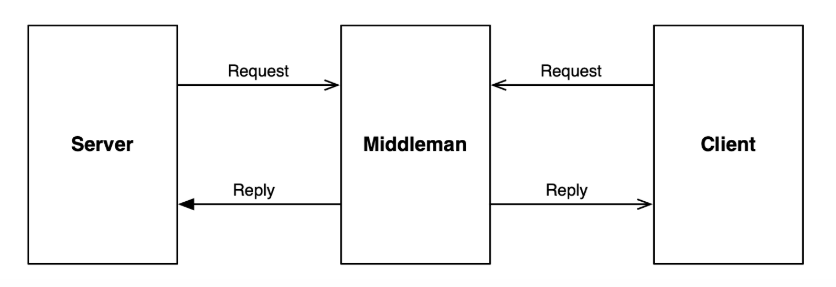
But if you’re developing system A that needs to interact with an exchange, knowing it’s an auction isn’t that useful. Here’s a better way of thinking about it. An exchange is a classic example of the broker pattern.

Let’s say you have 20 publishers all wanting to sell their ad space, and 20 advertisers all wanting to buy it. One way is for each publisher to send an object defining the ad space they have to each advertiser, who in return sends back individual offers to each publisher, per unit of ad space. The publisher then looks at all the offers and makes a decision.

Sounds super scalable.

Instead we have exchanges which act as middleman. First the publisher defines the properties of the ad space (dimensions, domain, format, etc.) and sends that definition to the middleman.

Any advertisers who are listening receive a notification from the middleman that ad space is available and it’s properties. The advertisers send their responses (the bids) to the middleman and an auction occurs to decide the winner.

The winner is then sent to the publisher.

From the Publisher view, all they need to do is send ad space definitions to the middleman and get appropriate ad units back. For the advertiser, all they do is receive definitions of ad space and return bid objects, with one of two flags, ‘bid’ or ‘no bid’.

Everything else is handled by the middleman.

Super simple. Next time, DSPs and SSPs or … “How the heck do publishers and advertisers communicate with the middleman?”